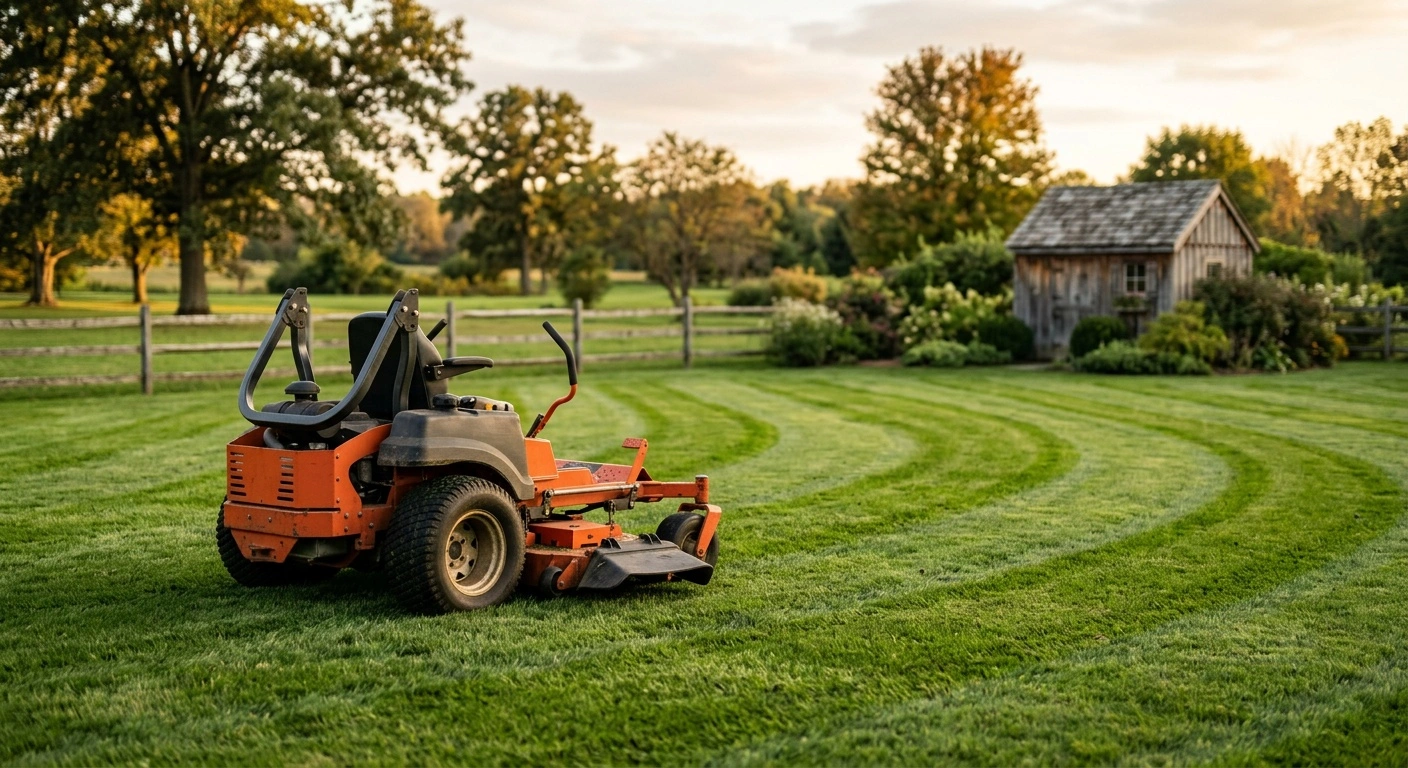
The best zero turn mowers for homeowners with big yards combine wide decks, durable hydrostatic transmissions, and comfortable controls. For most open properties, a 50- to 54-inch deck offers a practical balance. It covers ground quickly but remains manageable around trees, gates, and sheds.
Deck width only starts the buying decision. Transmission strength, terrain, dealer support, and fuel or battery capacity also affect long-term performance. A wide mower with light-duty drives may wear quickly on hills or while pulling attachments.
The picks below focus on specific use cases rather than an arbitrary ranking. Manufacturers can change engines, transmissions, and battery packages between model years. Confirm the current configuration with the manufacturer or dealer before buying.
Best Zero Turn Mowers by Use Case
For a typical large residential lawn, the Ariens IKON 52 balances deck size, construction, comfort, and serviceability. The Cub Cadet Ultima ZT1 50 offers a more approachable option for budget-conscious buyers. It has a fabricated deck without the weight or price of a prosumer machine.
Toro’s TimeCutter MAX with MyRIDE stands out when ride comfort matters. The suspension helps on lawns with shallow ruts or uneven grading. However, owners who mow several open acres may prefer the heavier drives and deck construction of the Bad Boy ZT Elite.
The EGO Power+ Z6 52-inch model provides an electric alternative to gasoline. Owners must plan around battery capacity, charging time, and available electrical service. Each mower requires adequate storage space and a property suited to lap-bar steering.
| Use case | Model | Deck | Power system | Price tier | Main drawback |
|---|---|---|---|---|---|
| Best overall for most big yards | Ariens IKON 52 | 52-inch fabricated, three-blade deck | Gas V-twin on common configurations | Midrange | Residential transaxles do not suit daily commercial work |
| Best value | Cub Cadet Ultima ZT1 50 | 50-inch fabricated deck | Gas V-twin | Entry to midrange | Lighter drivetrain than heavier prosumer models |
| Best for a smoother ride | Toro TimeCutter MAX 54 with MyRIDE | 54-inch fabricated deck | Gas V-twin | Midrange to premium residential | Suspension adds cost and cannot compensate for badly rutted ground |
| Best for large, demanding properties | Bad Boy ZT Elite 54 | 54-inch heavy fabricated deck | Gas engine options vary | Prosumer | Heavier, more expensive, and harder to maneuver in tight spaces |
| Best electric option | EGO Power+ Z6 52-inch | 52-inch, three-blade deck | 56-volt battery system | Premium residential | Runtime varies with battery capacity and mowing conditions |
Best Overall: Ariens IKON 52
The Ariens IKON 52 suits homeowners who mow a large lawn weekly but do not need commercial equipment. Its 52-inch fabricated deck handles open ground efficiently. It also fits through many common storage openings and access points.
Common configurations use a Kawasaki V-twin engine. However, buyers should verify the current engine and transaxle package instead of relying on an older listing. Ariens and its retailers may offer different configurations across model years.
The welded deck tolerates repeated use and occasional bumps better than a light stamped deck. A high-back seat also makes long mowing sessions more comfortable. Owners can reach routine service points without dismantling large sections of the mower.
The residential-grade drivetrain has clear limits. It handles routine mowing but does not suit daily commercial schedules, severe slopes, or frequent towing. Choose this model for a mostly open lawn with reasonably smooth ground.
Best Value: Cub Cadet Ultima ZT1 50
The Cub Cadet Ultima ZT1 50 works well for homeowners moving up from a lawn tractor. Its fabricated deck and straightforward controls cover the main residential needs. The 50-inch cutting width also fits around landscaping more easily than many larger decks.
Current versions commonly pair a twin-cylinder gasoline engine with dual hydrostatic drives. The exact engine may vary by retailer and model year. Check the model and serial information before comparing prices.
The open-frame layout provides useful access for cleaning and routine service. Its deck offers enough adjustment for ordinary residential turf. Purchase price remains lower because the mower omits commercial transmissions and operator-platform suspension.
That lower cost comes with a tradeoff. Long hills and rough acreage can place extra heat and load on the residential transaxles. Choose the ZT1 50 for relatively level lawns where value and maneuverability matter most.
Best Ride Comfort: Toro TimeCutter MAX 54 With MyRIDE
The Toro TimeCutter MAX 54 with MyRIDE suits lawns where repeated bumps make long sessions tiring. MyRIDE suspends the operator platform instead of relying only on seat padding. This design isolates the driver from some impacts and vibration.
Selected configurations combine MyRIDE with a 54-inch fabricated deck and a gasoline V-twin engine. Check that the quoted mower includes the suspension system. Not every TimeCutter model comes with MyRIDE.
The deck width works well on open residential properties. Toro also maintains a broad dealer network in many regions, which can simplify parts and service. Local support still varies, so contact nearby dealers before buying.
Suspension improves comfort, but it cannot make holes, roots, or washed-out ground safe at high speed. Slow down in rough sections to protect the operator, deck, and frame. This Toro fits owners who prioritize comfort without moving to a commercial mower.
Best for Demanding Acreage: Bad Boy ZT Elite 54
The Bad Boy ZT Elite 54 sits near the prosumer end of the market. It uses a heavy fabricated deck and more substantial drive components than many entry-level models. Those features suit long sessions, seasonal overgrowth, and moderately rough conditions.
Bad Boy may offer different engine choices across current configurations. Compare the exact engine, filter arrangement, transmission, and warranty. The model name alone does not reveal every component.
The heavier deck and frame provide useful durability on demanding properties. Common configurations also use serviceable transmissions suited to sustained workloads. Owners can maintain the transmission fluid and filters according to the service schedule.
Extra weight creates several drawbacks. The mower can mark soft turf, needs more storage room, and feels cumbersome around closely spaced trees. Buy it when annual mowing hours and property size justify equipment above the entry level.
Best Electric Option: EGO Power+ Z6 52-Inch
The 52-inch EGO Power+ Z6 provides zero-turn handling without gasoline, engine oil, or exhaust near the seat. It uses EGO’s 56-volt battery platform and holds several compatible battery packs. The included battery package varies by configuration.
Electric motors provide immediate response. Operators can also adjust blade speed and drive behavior without changing an engine throttle. The mower produces much less powertrain noise than a gasoline model.
Spinning blades still generate substantial noise, so hearing protection remains sensible. Runtime also changes with grass height, moisture, hills, blade speed, and repeated acceleration. No single acreage estimate covers every property.
Owners with very large lawns may need more batteries or a charging break. Either choice can raise the total cost. This mower works best with a predictable battery plan and a dry charging location.
How to Compare the Best Zero Turn Mowers
To compare the best zero turn mowers, start with the property rather than the advertised acreage rating. An open, level lawn takes less time than equal acreage divided by fences, ditches, and trees. Thick or wet grass also requires slower travel and overlapping passes.
Measure the narrowest gate, shed door, trailer opening, and route between permanent obstacles. Next, identify the steepest areas and check the slope limits in each operator’s manual. Finally, find a local source for blades, belts, filters, batteries, tires, and transmission service.
Deck Width and Lawn Layout
A wider deck reduces passes on open ground, but it does not always shorten total mowing time. Numerous trees and landscape beds may favor a 50- or 52-inch deck. A 60-inch mower may require too much repositioning in the same yard.
Wide, rigid decks can also scalp high spots on rolling or crowned lawns. Correct anti-scalp wheel settings reduce that risk. Even so, deck width should match the terrain as well as the acreage.
Measure the mower at its widest point, including the discharge chute in its operating position. Advertised cutting width does not show the total clearance required. A 54-inch cutting deck may need considerably more space to pass through a gate.
Check whether the chute lifts for storage and how it must sit during operation. Keep all required guards and discharge components in place. Use only mulching or collection equipment that the manufacturer approves for the model.
Hydrostatic Transmission Strength
Hydrostatic transaxles handle much of a zero turn mower’s workload. They deserve more attention than small differences in advertised engine power. Entry-level sealed units generally handle level residential mowing but may cost too much to rebuild after heavy wear.
Heavier serviceable transaxles usually manage heat, hills, and long operating periods better. Owners can change their fluid and filters according to the maintenance schedule. However, transmission specifications and service requirements vary by model.
Frequent towing and repeated climbing increase drivetrain load. Underinflated drive tires also make the system work harder. If you plan to tow, ask the dealer about approved attachments and loaded weight limits.
A tow hitch does not mean the mower can pull every implement that fits. Watch for slow response after warmup, whining, or unequal drive performance. Stop and arrange service if those symptoms appear.
Gas Versus Battery Power
Gasoline mowers remain practical when mowing takes several hours and refueling must happen quickly. They need oil changes, air-filter service, spark-plug maintenance, and fuel-system care. Old fuel can also cause starting problems after seasonal storage.
A twin-cylinder engine generally runs more smoothly than a small single-cylinder engine. Manufacturers commonly use V-twins in 50- to 54-inch zero turns. Still, engine brand and displacement matter less than overall mower suitability and service support.
Battery mowers remove most engine maintenance and start easily after storage. However, weather, terrain, and grass conditions change their usable runtime. Buyers should include future battery replacement costs in the ownership budget.
Charging equipment needs a dry location and a suitable electrical supply. Follow the manufacturer’s temperature, ventilation, and clearance requirements. Never modify a circuit or use an improvised extension-cord setup to power the charger.
Comfort, Controls, and Dealer Support
Seat shape, armrest position, vibration, and control adjustment become more important as mowing time increases. Sit on the mower before buying. Make sure the lap bars meet evenly without pulling your shoulders forward.
Test the deck lift from the seat and inspect the height markings. You should be able to change settings without awkward movements. Also confirm that the parking brake and blade controls feel natural.
Large rear tires often improve ride quality and traction. Suspension and correct tire pressure also affect comfort. Do not overinflate the tires to sharpen steering because that can reduce traction and worsen the ride.
A capable dealer can handle transmission work, electrical diagnostics, warranty claims, and model-specific parts. Ask about expected service times during peak mowing season. Also find out how the dealer transports a mower that cannot move under its own power.
Zero Turn Mower Safety on Slopes and Rough Ground
Zero turn mowers offer excellent maneuverability, but slopes can make their steering behavior unforgiving. Follow the slope limits and operating instructions in the owner’s manual. Weight distribution, tires, and rollover protection vary among models.
Avoid wet slopes, drop-offs, pond edges, retaining walls, and unstable ground. A sliding drive tire can quickly change the mower’s direction. Use a different mowing method when the terrain exceeds the manufacturer’s limits.
Walk the property before mowing and remove wire, stones, toys, branches, and other debris. The blades can throw small objects with considerable force. Wear eye protection, hearing protection, sturdy footwear, and close-fitting clothing.
Never carry passengers. Keep children and pets indoors or far from the work area. Zero turn mowers have blind spots, especially while reversing or turning near obstacles.
If the mower has a rollover protective structure, follow the manufacturer’s directions for using it and the seat belt. Do not remove or modify safety equipment for convenience. The manual may specify different procedures when the structure sits in a lowered position.
Before inspecting damage, disengage the blades and set the parking brake. Then shut off the mower, remove the key, and wait for every moving part to stop. Never reach under a deck while its lift system provides the only support.
Use properly rated stands whenever you must raise the mower. Place them only at support points listed in the manual. A jack or deck lift alone does not provide safe support.
Maintenance That Protects Your Mower
Regular maintenance helps a zero turn mower last longer and cut more cleanly. Grass buildup, dull blades, incorrect tire pressure, and blocked cooling screens create avoidable wear. Follow the intervals in the owner’s manual rather than relying on memory.
Check engine oil or battery condition before mowing, as the manufacturer directs. Inspect tire pressure, guards, and loose hardware regularly. Clear packed clippings from engine cooling screens and transmission areas to control heat.
Sharpen or replace blades when grass develops torn, pale tips. Dull blades require more power and leave the lawn vulnerable to stress. Replace bent, cracked, or heavily worn blades instead of trying to repair them.
Before deck service, disconnect the spark-plug leads on a gasoline mower. For an electric mower, follow the manufacturer’s battery isolation procedure. Wear gloves and eye protection, then secure the machine on approved supports.
Use the specified blade-removal procedure and torque values during reassembly. Incorrectly tightened hardware can damage parts or create a serious hazard. If the manual requires new fasteners, do not reuse the old ones.
Scrape the deck only after shutting down and securing the mower. Keep high-pressure water away from bearings, electrical connectors, and transmission seals. Inspect belts for cracks, glazing, and frayed edges before they fail.
At season’s end, follow the correct fuel-storage procedure for a gasoline mower. Electric models require battery storage within the manufacturer’s temperature and charge guidelines. Record filter, belt, blade, battery, and fluid part numbers for future service.
Choosing the Right Zero Turn Mower for Your Yard
The best zero turn mowers match their decks and drivetrains to the property’s terrain, layout, and weekly workload. For a smooth residential lawn, the Ariens IKON 52 offers a strong balance of width and durability. The Cub Cadet Ultima ZT1 50 prioritizes value and manageable size.
Choose the Toro TimeCutter MAX with MyRIDE when rough ground makes operator comfort a priority. Move up to the Bad Boy ZT Elite for longer sessions and tougher conditions. Its heavier construction makes sense only when the workload justifies the added cost and weight.
Consider the EGO Z6 after calculating battery capacity, charging time, and expected mowing duration. Measure all access points before committing to any model. Also inspect the terrain, test the seat and controls, and confirm local parts support.
Those practical checks matter more than a small difference in top speed or engine output. The right mower should fit the property, the operator, and the maintenance plan. Confirm current specifications and safety requirements before making the final purchase.